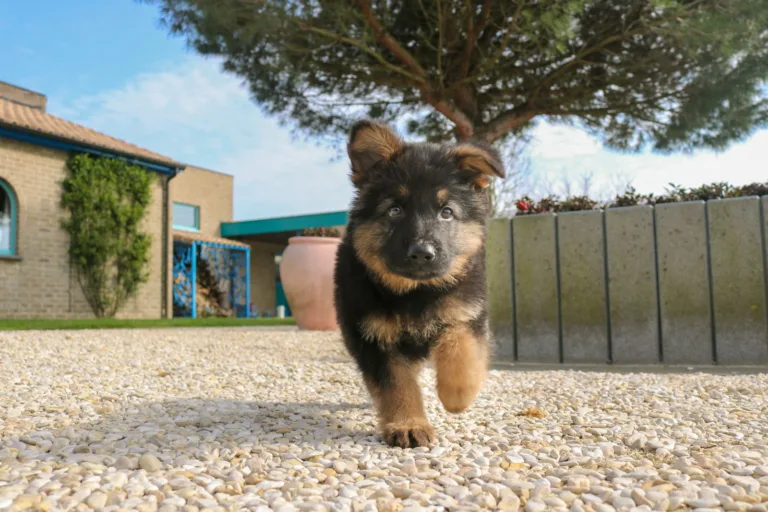
In this article
A six-month-old German Shepherd is still a developing dog, even if it already occupies most of the sofa. Expect ongoing learning, changing proportions and a need for carefully managed experiences. Size is not a reliable measure of judgment.
Use age stages to organize care, not to decide that a puppy has failed because it missed a milestone.
Puppy stages at a glance
| Stage | Main priorities | Questions to discuss |
|---|---|---|
| Birth to eight weeks | Appropriate early care and experiences with the breeder or rescue | Health records, diet and socialization history |
| Eight to twelve weeks | Toileting routine, sleep, gentle handling and safe exposure | Local disease risk and vaccination plan |
| Three to four months | Short training sessions and confidence in ordinary situations | Growth, food amount and coping with new places |
| Five to six months | Reinforce recall, leash skills and calm behavior | Changing teeth, equipment fit and activity |
| Seven to twelve months | Practice skills around manageable distractions | Any new fear, pain or persistent behavior difficulty |
| One to two years | Continue training and reassess adult routines | Maturity, condition and suitable exercise |
These are planning periods, not fixed developmental deadlines.
The first weeks at home
Keep the initial routine predictable. Provide a quiet sleeping place, take the puppy to its toilet area after waking and eating, and reward useful behavior as it happens.
Introduce handling in brief, comfortable sessions. Touching a paw and rewarding relaxation can be more productive than attempting a complete grooming appointment on day one. Your puppy’s attention span is not improved by your enthusiasm for finishing the checklist.
Socialization without overwhelming the puppy
Socialization means learning that everyday experiences can be safe. It does not require meeting every dog or being passed around by every visitor.
The AVSAB puppy socialization statement supports early, appropriately managed experiences rather than postponing all exposure until vaccination is finished. Ask your veterinarian which settings are suitable locally.
Let the puppy observe at a comfortable distance and leave before it becomes overwhelmed. Repeatedly forcing contact can teach the opposite lesson.
What changes around six months?
Care needs often become more noticeable as a puppy gets stronger. Mouthing that was easy to redirect in a small puppy can be harder to manage if the household has encouraged hand wrestling.
Continue rewarding calm choices and use gates, suitable toys and planned rest to make those choices easier. The puppy biting guide and training guide provide focused routines.
Do not interpret a larger appetite as permission to keep enlarging meals. Use the growth guide and condition checks to review feeding.
Adolescence needs practice
If a previously learned skill becomes unreliable around distractions, return to an easier setting. Reduce distance, distraction or duration rather than repeating the cue more loudly.
Record what happened before difficult behavior: sleep, activity, unfamiliar dogs, handling or time alone. Persistent changes may need veterinary or behavior support. “Teenager” is a description, not a diagnosis that explains every problem.
Frequently asked questions
What should an eight-week-old puppy know?
Expect a beginner. Start routines, name recognition and gentle handling without assuming reliable bladder control or obedience.
How big should a six-month-old German Shepherd be?
There is no single appropriate weight for all puppies. Use serial growth measurements and body condition rather than an isolated internet average.
What is the worst puppy age?
There is no universal worst age. Challenges change as physical ability, learning history and household demands change.
When do German Shepherd puppies calm down?
Maturation helps some dogs, but rest and settling are skills and routines to support throughout development. Avoid relying on a birthday to solve an unmet need.