In this article
- French Bulldog character traits in everyday life
- French Bulldogs at a glance
- Why does my Frenchie follow me everywhere
- Sleep and changes in energy
- Living with children and other pets
- Feeding without chasing a breed average
- Choosing food and using treats
- Exercise and heat limits
- Training a French Bulldog
- Grooming beyond a short coat
- Health concerns and a real example
- Understanding lifespan figures
- Colors and advertised types
- Is a French Bulldog right for your home
- FAQs
- Plan your adult dog's portions
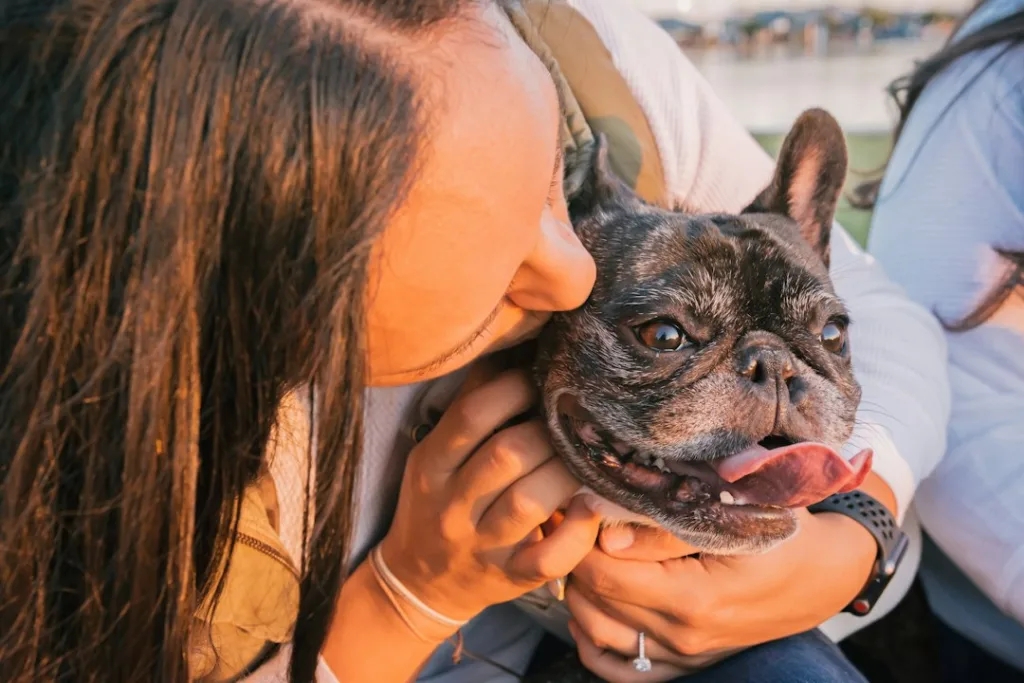
French Bulldog character traits often include affection, playfulness, alertness, and a strong interest in their people. Those tendencies can make a Frenchie an engaging companion. They do not guarantee an easy dog, a quiet household, or a pet that can spend every workday alone.
The breed also needs owners who take breathing, temperature, skin care, and body weight seriously. A short walk that suits one Frenchie may overwhelm another. A dog who looks relaxed may be uncomfortable rather than simply sleepy.
This guide explains what everyday ownership can involve. Use it to assess the individual dog in front of you, including their health records, behavior, and ability to cope with your routine.
French Bulldog character traits in everyday life
Frenchies commonly seek company and enjoy participating in household activity. That may mean following you between rooms, offering a toy, or settling beside your chair. Affection does not mean every dog enjoys being picked up, hugged, or approached while sleeping.
Playfulness can appear in short bursts. Let the dog choose breaks rather than encouraging activity until they become exhausted. Interest in play and the physical ability to sustain it are separate questions in this breed.
Some Frenchies are socially confident. Others need time with unfamiliar people, dogs, or places. Watch the whole body rather than deciding that an upright ear or wagging tail always means friendliness.
| Tendency | What you might notice | Helpful response |
|---|---|---|
| Interest in people | Following household members | Teach comfortable independent settling |
| Playfulness | Bringing toys or inviting brief games | Offer breaks before heavy panting |
| Alertness | Reacting to hallway sounds | Reward calm attention and manage triggers |
| Individual preferences | Avoiding certain handling | Respect space and teach handling gradually |
These are ownership examples, not a personality test. The dog's learning history, age, health, and environment also shape behavior. A rescue dog may behave differently after settling into a new home.
French Bulldogs at a glance
The American Kennel Club standard describes a compact dog with erect bat ears, a short smooth coat, and a naturally short tail. Its 28-pound maximum is a show rule. It is not a healthy-weight target for every Frenchie.
| Feature | What to know |
|---|---|
| Coat | Usually short and smooth under the breed standard |
| Ears | Erect bat ears are the standard form |
| Tail | Naturally short, straight or screwed |
| Weight | The show ceiling is 28 pounds, not an obesity diagnosis |
| Exercise | Individual breathing, fitness, age, and weather determine tolerance |
| Lifespan | Study estimates differ by population and method |
A dog can meet an appearance standard and still need medical care. A dog outside that standard can still be a valued companion. Neither a registration document nor a color description replaces a health assessment.
Why does my Frenchie follow me everywhere
Following you can reflect social interest, learned habits, or anticipation of food and activity. It does not by itself prove separation anxiety. The more useful question is what happens when you leave.
A dog who rests after a brief departure is behaving differently from one who pants, paces, vocalizes, or struggles to escape. Record short departures if you need to understand what happens out of sight. Bring concerning footage to your veterinarian or a qualified behavior professional.
Build independence in manageable steps. Reward resting on a bed while you move nearby. Offer a safe activity, then increase distance or duration only while the dog remains comfortable. Avoid suddenly testing whether a distressed dog can tolerate an entire workday.
Plan practical support before adopting. A midday visit may help with toileting and companionship, but it will not automatically treat panic during every absence. Some households need a more structured behavior plan.
Sleep and changes in energy
French Bulldogs rest throughout the day, but there is no single sleep-hour target that identifies a healthy Frenchie. Age, household activity, medication, pain, and breathing comfort all affect rest.
Look for changes from your dog's normal pattern. Sleeping more alongside reduced appetite, reluctance to walk, or discomfort deserves attention. Repeated waking, difficulty settling, or unusual breathing during rest also warrants a veterinary discussion.
Keep a short record of when the change began and what else changed. Video can help describe a breathing noise, but it cannot replace an examination. Do not assume snorting or interrupted sleep is harmless because the dog is flat-faced.
Living with children and other pets
A Frenchie can live successfully with children, cats, or other dogs, but compatibility belongs to the individuals involved. Breed reputation cannot guarantee a safe introduction.
Give the dog a resting area that children do not enter. Teach children to leave food, chews, and sleeping dogs alone. An adult should supervise interactions and end them before either the child or dog becomes overwhelmed.
Introduce pets with space and a way to retreat. A cat needs an escape route the dog cannot follow. A dog who has lived with one cat may still react differently to another. Avoid forcing nose-to-nose meetings or letting animals chase until they supposedly work things out.
Ask a rescue or breeder for specific observations. “Friendly” is less useful than knowing how the dog behaves around visiting children, unfamiliar dogs, handling, and food. A quiet meeting in one setting does not reveal every future response.
Feeding without chasing a breed average
Feed a complete and balanced diet appropriate for the dog's life stage. Measure the ration and include treats, chews, toppers, and food used in training when you review daily intake.
The amount in a cup depends on the food. Two products can supply very different calories in the same measuring cup. A kitchen scale makes portions easier to repeat, especially when several people feed the dog.
Our French Bulldog feeding guide by weight and age explains how calories, food density, and body condition fit together. Its adult examples should not become puppy or medical weight-loss prescriptions.
Check the ribs, waist, and overall condition with your veterinarian. The goal is a suitable body condition for that dog, not reaching the maximum weight allowed in the show ring. Avoid feeding extra simply because a larger Frenchie online looks more impressive.
Choosing food and using treats
An adult maintenance formula and a puppy growth formula serve different needs. Read the nutritional adequacy statement, not just the breed picture on the bag. AAFCO does not approve individual brands.
For a healthy dog, most calories should come from the balanced main diet. AAHA recommends keeping treats and other extras to no more than 10 percent of total calories. Medical diets may require stricter rules.
When choosing food for a French Bulldog, consider the dog's health, tolerance, life stage, and your ability to feed it consistently. Price, fashionable ingredients, and a breed-specific label do not establish that one product is best for every Frenchie.
Persistent itching, vomiting, diarrhea, or weight loss needs investigation. Repeatedly changing proteins without a plan can make the history harder to interpret. Keep the food bag or a photograph of its full label for appointments.
Exercise and heat limits
French Bulldogs need opportunities to move, explore, and engage with their surroundings. The right amount depends on the dog's breathing function and physical condition. There is no universal walk duration that is safe in every season.
Use short, comfortable outings with opportunities to stop. Choose cooler conditions and watch the dog rather than a step counter. Heat, humidity, excitement, and effort can combine even when the outing seems modest.
Stop activity when breathing becomes more difficult or the dog cannot recover comfortably. Marked breathing distress, collapse, or abnormal gum color calls for urgent veterinary care. Do not force a struggling dog to finish the route home.
Indoor scent games, food puzzles, and brief training sessions can provide engagement without prolonged exertion. They complement appropriate physical activity. They do not make a dog with untreated airway problems medically comfortable.
Training a French Bulldog
Reward-based training gives the dog clear information about which behavior works. Start with practical skills such as responding to their name, coming when called, settling on a mat, and tolerating gentle handling.
Keep sessions short enough that the dog remains interested and physically comfortable. Reward the behavior you want promptly. If a task repeatedly fails, reduce the difficulty instead of deciding the dog is trying to challenge you.
The same teaching principles appear in our Golden Retriever training guide, although exercise needs and individual motivations differ. You can borrow the learning method without copying another breed's daily activity plan.
For house training, offer predictable toilet opportunities and reward success at the correct location. Clean accidents and improve supervision. Punishment after an accident does not teach the dog where to go next time.
Sudden growling, avoidance, or resistance to handling can reflect pain. Treat a behavior change as information. Training should not be used to make a painful dog tolerate discomfort without assessment.
Grooming beyond a short coat
A short coat still sheds and needs care. Gentle brushing helps remove loose hair and gives you a chance to notice redness, scabs, parasites, or changes in the skin.
Inspect facial folds and the area around the tail. Some dogs have deeper pockets than others. Cleaning needs depend on the individual anatomy and any medical treatment plan. Repeated odor, moisture, soreness, or discharge deserves examination rather than increasingly strong products.
Check nails, teeth, and ears as part of a regular routine. Introduce handling gradually and reward cooperation. Do not push cotton swabs into the ear canal or treat a painful ear with leftover drops.
Bathe when the dog is dirty or according to veterinary advice for a skin condition. Rinse carefully and dry folds. A fixed weekly schedule is not suitable for every coat and skin problem.
Health concerns and a real example
French Bulldogs have documented health vulnerabilities. A 2021 VetCompass study comparing UK veterinary records found higher adjusted odds of several disorders, including narrowed nostrils, obstructive airway disease, skin-fold dermatitis, and difficult birth.
Those findings describe population differences. They do not mean every dog develops every condition. They also should not be converted from odds ratios into percentages of dogs affected.
Animal Trust published the story of Oli, a French Bulldog whose breathing difficulties affected exercise and settling. After assessment and corrective airway surgery, the provider reported easier breathing and improved comfort.
Oli's case illustrates why apparent inactivity should not automatically be treated as personality. It is one clinical story, not a success rate or a promise that surgery produces the same result in every dog.
Discuss breathing, skin, ears, eyes, mobility, and body condition at routine visits. Ask which changes require prompt contact. Keep records of treatments and previous anesthetic problems so a new clinic can understand the dog's history.
Understanding lifespan figures
Different research methods produce different lifespan estimates. A 2022 UK life-table study estimated French Bulldog life expectancy at birth at 4.53 years. A larger 2024 UK survival study reported a median of 9.8 years.
These numbers measure different things in different datasets. They are not competing expiry dates for your dog. They also do not show that the breed's lifespan doubled in two years.
For ownership decisions, focus on the dog's current health, documented background, and access to ongoing care. A population estimate can inform a discussion about breed welfare. It cannot predict the exact age an individual will reach.
Colors and advertised types
The AKC standard accepts specified colors and markings, including white, cream, fawn, brindle, and piebald combinations. Other advertised colors may fall outside the show standard.
Words such as fluffy, teacup, and big rope are not evidence of better health. A coat-color DNA result describes selected genetic traits. It does not replace airway assessment, a physical examination, or relevant health screening.
Ask what a seller's label means and request the actual records behind claims. Do not let a rare-color premium distract from breathing comfort, skin condition, mobility, and the quality of the dog's care.
Is a French Bulldog right for your home
Consider your ordinary week, including workdays, travel, summer heat, and unexpected veterinary appointments. A small dog can still require substantial time, planning, and money.
Budget separately for acquisition, routine care, food, equipment, and unplanned treatment. Obtain local quotes rather than relying on one national ownership-cost figure. If considering insurance, review exclusions and pre-existing-condition terms before assuming a policy will cover future care.
Meet the individual dog and ask specific questions. Can they settle comfortably, move without distress, and cope with normal handling? What support will be available after adoption or purchase? Good answers include records and observations, not only assurances.
Choose a Frenchie because you can meet those needs through changing life stages. Affection and playfulness are appealing. Comfortable breathing, manageable routines, and appropriate care are what make those qualities enjoyable in daily life.
The term brachycephalic obstructive airway syndrome describes airway obstruction associated with short-headed anatomy. Understanding the term helps explain why breathing function matters more than the appearance of a flat face.
FAQs
What are the character traits of a French Bulldog?
French Bulldogs often show affection, playfulness, alertness, and interest in people. Individual temperament varies with health, experience, and environment. Assess the particular dog's behavior rather than expecting every Frenchie to match a breed description.
Are French Bulldogs good companion dogs?
They can be good companions for homes that provide company, training, suitable activity, and ongoing health care. Small size does not remove their need for attention or make extended time alone suitable for every dog.
Why are French Bulldogs so clingy?
Following people can reflect social interest or learned habits. Distress during separation is a different concern. Pacing, panic, persistent vocalizing, or escape attempts when alone warrant assessment and a gradual support plan.
Do French Bulldogs sleep a lot?
Frenchies rest regularly, but there is no single healthy sleep total for the breed. A change in sleep, energy, breathing, or appetite matters more than matching an online number. Discuss persistent changes with your veterinarian.
Plan your adult dog's portions
For a healthy adult Frenchie, use our dog food calculator as a starting estimate, then adjust with body-condition checks and veterinary guidance. Puppies and dogs with medical needs require an individual feeding plan.