In this article
A mixed Golden Retriever has Golden ancestry combined with one or more other breeds. The other parent matters, but puppies do not inherit traits as a tidy half-and-half package.
A cross can be a wonderful companion. It can also shed, develop inherited disease, or grow larger than an advertisement suggests. Choose the dog with the same care you would give any other lifelong commitment.
15 Mixed Golden Retriever Crosses to Know
The crosses below illustrate fifteen combinations owners may encounter. They are not a national popularity ranking, and their descriptive names do not establish exact ancestry.
| Other parent | What to investigate first | Size and coat caution |
|---|---|---|
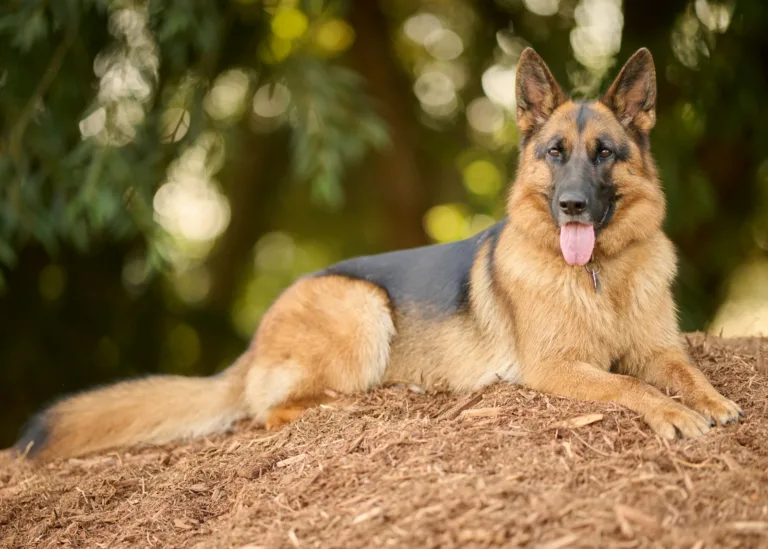
| German Shepherd Dog | Social confidence, training needs, and parental joint screening | Often a substantial dog; shedding remains possible |
| Bernese Mountain Dog | Large-dog handling and both families’ health histories | A large parent does not set a precise crossbred weight |
| Labrador Retriever | Activity, retrieving interests, and actual family temperament | Coat may be shorter than a Golden’s but still shed |
| Cocker Spaniel | Exact Cocker breed, size, behavior, and screening | Smaller ancestry does not guarantee a miniature adult |
| Rottweiler | Strength, social behavior, management, and both parents’ health | Do not assume a Golden personality in a stronger body |
| Irish Setter | Activity, recall, and coat care | Sporting ancestry can mean substantial activity needs |
| Cavalier King Charles Spaniel | Appropriate cardiac and other parent-breed screening | Small-parent ancestry does not remove inherited risks |
| Dalmatian | Hearing assessment and relevant parent-breed health concerns | Coat pattern and adult proportions can vary |
| Border Collie | Sensitivity, movement-related behavior, and mental activity | Herding-related tendencies may need management |
| Siberian Husky | Recall, secure containment, vocal behavior, and coat care | Coat and behavior need individual assessment |
| Chihuahua | Documented ancestry, actual adult relatives, and breeding welfare | A major parent-size difference makes simple predictions especially unhelpful |
| Saint Bernard | Large-dog care, mobility, and family health | Potential size needs serious practical planning |
| Newfoundland | Size, coat maintenance, and cardiac and orthopedic history | Heavy coat and large size may affect daily care |
| Boxer | Excitability, health screening, and comfortable breathing in the individual | Do not infer a fixed head shape or activity level |
| Australian Cattle Dog | Herding tendencies, handling, and structured activity | A compact outline does not mean low energy |
These are questions to investigate, not diagnoses or guarantees. Testing should follow the actual parent breeds and individual family history.
Retriever crosses: Golden–Lab and Golden–Setter
A Golden–Lab cross may combine familiar retrieving traits, but there is still variation in coat, size, and behavior. Canine Companions reports using purpose-bred Labrador–Golden crosses in its service-dog program; that is a documented program example, not proof that any privately bred cross is service-ready.
Golden–Setter crosses also combine sporting ancestry. Ask about recall, activity, and settling rather than assuming a red coat identifies the mix. Our Labrador-versus-Golden guide and red Golden guide explain the parent-breed distinctions.
Smaller-parent crosses: Cocker, Cavalier, and Chihuahua
These searches often come from people wanting a smaller Golden-like dog. Adult size remains uncertain, especially with complex ancestry or a large difference between parents.
Ask which Cocker breed is involved, request the actual adult sizes of relatives, and verify health testing appropriate to every parent. A Cavalier cross still needs careful attention to that family’s cardiac history. A dramatic parent-size mismatch also raises practical breeding and welfare questions that a veterinarian should assess.
Our mini Golden guide explains why “mini” and “comfort” are not standardized guarantees.
Larger-parent crosses: Bernese, Saint Bernard, and Newfoundland
Plan for the possibility of a large dog before committing. Handling, vehicle space, equipment, medication costs, and getting an unwell dog into the car all become practical concerns.
Do not average two breed-standard weights and present the result as the puppy’s adult target. Mature relatives and a veterinarian’s growth assessment provide better context, while an adult rescue dog offers actual measurements.
Working and herding crosses
German Shepherd, Rottweiler, Border Collie, Husky, and Australian Cattle Dog ancestry can introduce needs that a Golden-focused sales description leaves out. Ask about the individual parents’ responses to people, movement, frustration, handling, and unfamiliar environments.
A coat that resembles a Golden does not erase the rest of the pedigree. Our temperament guide helps turn vague claims such as “great family dog” into useful questions.
Dalmatian and Boxer crosses deserve the same individual approach. Investigate parent-specific health issues rather than treating mixed ancestry as automatic protection.
Are mixed dogs healthier?
Bellumori and colleagues’ 2013 study examined 24 inherited disorders in veterinary records. Differences between purebred and mixed-breed dogs depended on the disorder: the study did not support a blanket claim that every mix avoids inherited disease.
This is a documented research comparison, not evidence for the health of a particular designer cross. Verify screening, family history, and the puppy’s veterinary care.
Coat, allergies, and DNA tests
A mix can inherit a variable coat, including substantial shedding. A Golden–Poodle cross, although not one of the fifteen rows above, also cannot be guaranteed non-shedding or allergy-safe simply from its label.
Breed ancestry tests can help clarify heritage, but companies’ reference panels and methods affect estimates. An ancestry percentage is not a complete medical screen or a personality prediction.
Hypothetical adoption example: A shelter labels a young dog a Golden mix based on appearance. Treat that as a working description. Its observed behavior, veterinary assessment, and eventual adult size are more useful than making a firm care plan from an unconfirmed percentage.
FAQs
What is the best Golden Retriever mix?
There is no universal best cross. Choose an individual whose likely size, behavior, health needs, and coat care fit your home.
Can a Golden mix be smaller than a Golden?
Yes, but smaller-parent ancestry does not guarantee a particular adult weight. An adult dog provides greater size certainty.
Will a Golden mix have the Golden personality?
Not necessarily. Both ancestry and individual development matter, and temperament is not inherited as a fixed half-share.
Can I identify a mix from a photograph?
Not reliably enough to assign exact ancestry. Records and appropriate testing can add information, with limitations.
Are these the fifteen most popular mixes in the US?
No national popularity claim is made. Search estimates in a planning sheet are not a census of living dogs or purchases.