
In this article
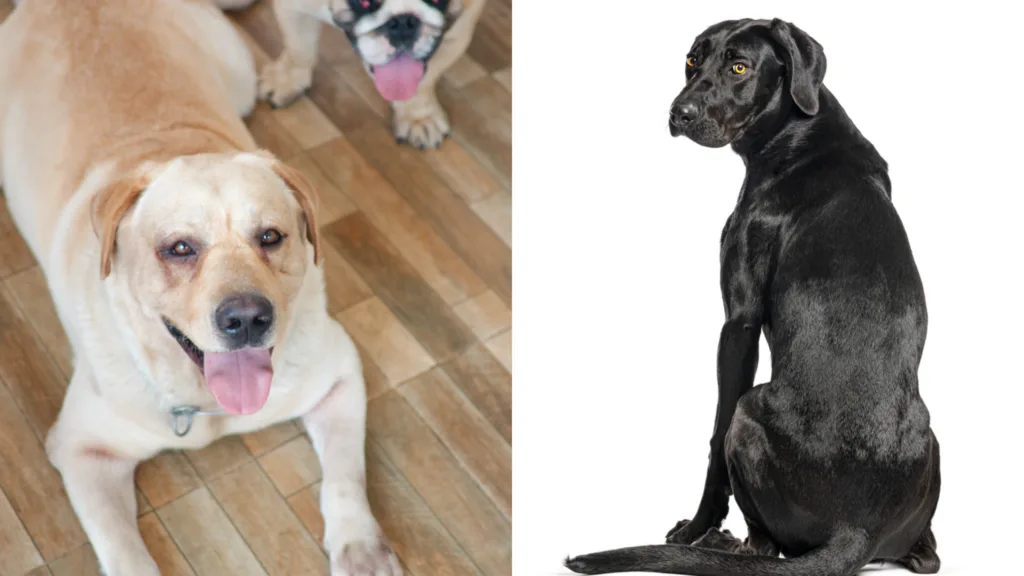
When comparing an English Lab vs American Lab, it’s important to know that both are Labrador Retrievers. In everyday conversation, “English” often describes show or bench lines, while “American” often describes field lines. These are informal labels, not separate AKC breeds or reliable statements about where a dog was born.
Show-line dogs often look broader and more substantial; field-line dogs often look leaner and more athletic. Neither label tells you whether a particular puppy will spend the evening quietly beside you or reorganizing your laundry.
What do show and field lines actually mean?
Breeders selecting for the conformation ring emphasize the breed standard’s appearance and movement. Breeders selecting for demanding field work emphasize the traits needed for that work. Individual breeding programs can pursue both, and there is overlap.
Ask what the parents and relatives actually do. “English” on a sales page is much less informative than health records, an explanation of the breeding goals, and a chance to observe adult relatives.
| Feature | Show or bench tendency | Field tendency |
|---|---|---|
| Build | Broader head, heavier-looking bone, more substantial outline | Leaner outline, often a more leggy appearance |
| Selection emphasis | Conformation and breed type | Retrieving work, responsiveness, and performance |
| Activity | Still an active sporting dog | Some lines selected for sustained, demanding work |
| Household settling | Must be assessed and taught | Must be assessed and taught |
| Registration | Labrador Retriever | Labrador Retriever |
| Health checks | Breed-relevant screening required | Breed-relevant screening required |
These are tendencies, not a diagnostic checklist. Body fat can also create a “stocky” outline; it is not proof of show breeding.
Are English Labs bigger?
They may look broader or heavier, but “English” does not establish a separate official size range. Compare height, frame, and body condition rather than scale weight alone.
The adult Labrador size guide covers standard measurements and their limits. A dog above a breed-standard weight is not automatically unhealthy, and a dog within the range is not automatically lean.
Is a British Lab the same as an English Lab?
Not necessarily. Some breeders use “British” to describe working dogs from British field lines. Others use geographic labels loosely. Ask for the pedigree, the breeder’s definition, and the practical traits being selected instead of assuming the word means a calm show dog.
Are English Labs calmer than American Labs?
Some show-line dogs may be less intensely driven than dogs bred for demanding field work, but the label cannot promise calm behavior. Age, health, training, sleep, daily opportunities, and the individual dog’s temperament all matter.
A young show-line Lab still needs exercise, chewing outlets, and guidance around visitors. A field-line Lab may settle well in a home that meets its needs. Watch how adult dogs behave after activity, how they recover from excitement, and whether they can disengage from distractions.
For everyday household questions, see Labrador temperament. For training steps, use the Labrador training guide.
Do the two types differ in health or lifespan?
Do not assume one informal type is healthier or longer-lived. Both need attention to inherited conditions, joints, eyes, body condition, and preventive care. A claim that one type lives several years longer needs comparable population evidence, not a breeder’s oldest dog.
Request actual parental screening results and discuss family history. A broad head, working title, or registration certificate cannot replace health screening. The Labrador health guide explains what to check and why DNA panels are only part of the picture.
Frequently asked questions
Which type fits your household?
Choose the individual and breeding program that match the activities you can provide most days. Do not buy for the weekends you imagine while ignoring the weekdays you already have.
| Your situation | Useful selection question |
|---|---|
| Family with children | How do adult relatives handle ordinary household activity, and can you provide supervision and training? |
| Apartment or small home | Can you meet toileting, exercise, enrichment, and alone-time needs outside the floor plan? |
| Hunting or retriever sports | What relevant work have the parents demonstrated, and what support does the breeder offer? |
| First dog | Is the individual manageable for your experience, with a realistic training plan? |
| Preference for a calmer companion | Would an assessed adult dog provide better information than a puppy label? |
Our hunting Labrador guide explains how working ability, safety, and training fit together.
Can you tell the type from a photograph?
You may notice clues, but a photograph cannot establish breeding history or future behavior. Posture, age, camera angle, and body condition change the impression. Pedigree and breeder records provide better evidence.
“English cream” and “English red” also combine line descriptions with color marketing. Pale cream through fox red falls within the yellow color range; neither shade creates a separate kind of Labrador. See Labrador colors and fox red Labs for those distinctions.
Evidence and review
Key source: the Labrador Retriever Club’s puppy-buyer guidance. Additional checks: AKC Labrador standard and retriever sport descriptions. Research reviewed September 27, 2026. Line descriptions are tendencies, not guarantees about an individual dog.


