In this article
- 8 Dogs Like Golden Retrievers at a Glance
- Labrador Retriever: familiar work, shorter coat
- Flat-Coated Retriever: the black look-alike question
- Toller: smaller does not mean easier
- Irish Setter: sporting energy in a different package
- Standard Poodle: consider the coat commitment
- German Shepherd: a different working emphasis
- English Cocker Spaniel and Collie
- A practical way to decide
- FAQs
Finding dogs like Golden Retrievers depends on what you want to keep: a retrieving background, a feathered coat, sociability, or a manageable household routine. No alternative is simply a Golden with one inconvenient feature removed.
Choose the traits that matter most, then examine the trade-offs. “Similar-looking” and “similar to live with” are different searches.
8 Dogs Like Golden Retrievers at a Glance
| Dog | Why it may appeal | Difference to investigate |
|---|---|---|
| Labrador Retriever | Retrieving background and active companionship | Shorter coat still sheds |
| Flat-Coated Retriever | Feathered retriever outline | Different breed health profile and individual energy |
| Nova Scotia Duck Tolling Retriever | Smaller retriever with a reddish coat | Small size does not mean low drive |
| Irish Setter | Sporting background and flowing coat | Setter role and a different outline |
| Standard Poodle | Athletic, trainable companion | Different coat with significant grooming needs |
| German Shepherd Dog | Close human partnership and trainability | Different working background and social tendencies |
| English Cocker Spaniel | Smaller sporting dog with feathering | Smaller body, not necessarily a quieter routine |
| Collie | Family-companion appeal and, in rough coats, abundant hair | Herding background and different behavior priorities |
These are comparison prompts rather than temperament guarantees. The AKC breed directory provides individual standards and breed profiles to investigate further.
Labrador Retriever: familiar work, shorter coat
A Lab is a logical comparison when you like retrieving dogs but prefer less feathering maintenance. Both breeds still need activity, training, company, and realistic expectations about shedding.
Use our Labrador-versus-Golden guide for the detailed comparison. Do not choose solely on the assumption that one is universally calmer.
Flat-Coated Retriever: the black look-alike question
A black Flat-Coat can resemble a dark-coated version of a Golden at first glance, but it is a separate breed, also found in liver. It is not a black Golden.
Review breed-specific health guidance and meet adult dogs. A similar silhouette does not mean identical health probabilities or an identical home routine.
Toller: smaller does not mean easier
The Nova Scotia Duck Tolling Retriever offers a smaller retriever option, often with a red-toned coat and white markings. Its working purpose and individual needs deserve serious attention.
Ask about noise, sensitivity, drive, and settling in the actual family. Choosing a smaller dog solely to reduce exercise demands can miss the reason it was bred.
Irish Setter: sporting energy in a different package
Irish Setters have a distinctive red coat and a setter background rather than the Golden’s retrieving identity. Their outline and movement can appeal to people who enjoy active sporting dogs.
A red Golden and an Irish Setter are not interchangeable descriptions. Our red Golden guide explains the distinction.
Standard Poodle: consider the coat commitment
A Standard Poodle may appeal to an active owner who prefers less loose hair. That trade comes with regular grooming and clipping needs; low shedding does not mean low maintenance.
No dog is guaranteed allergy-safe. A Goldendoodle also does not guarantee a Poodle coat plus a Golden personality. Our mini Golden guide explains why crossbred coat predictions need caution.
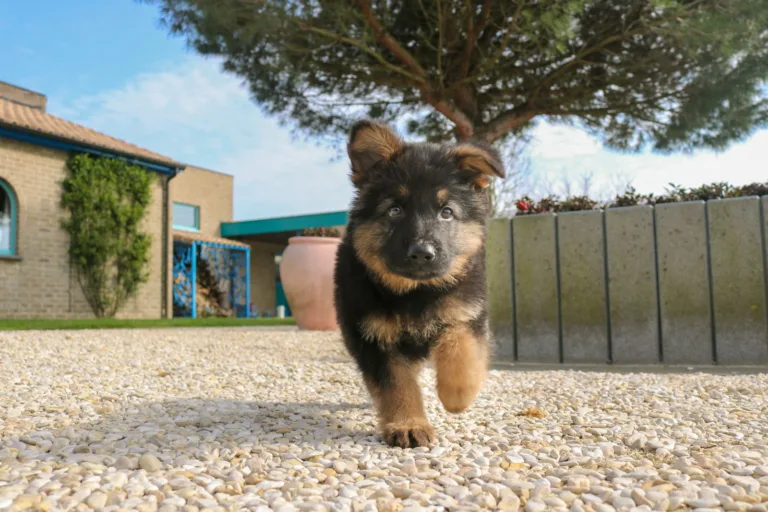
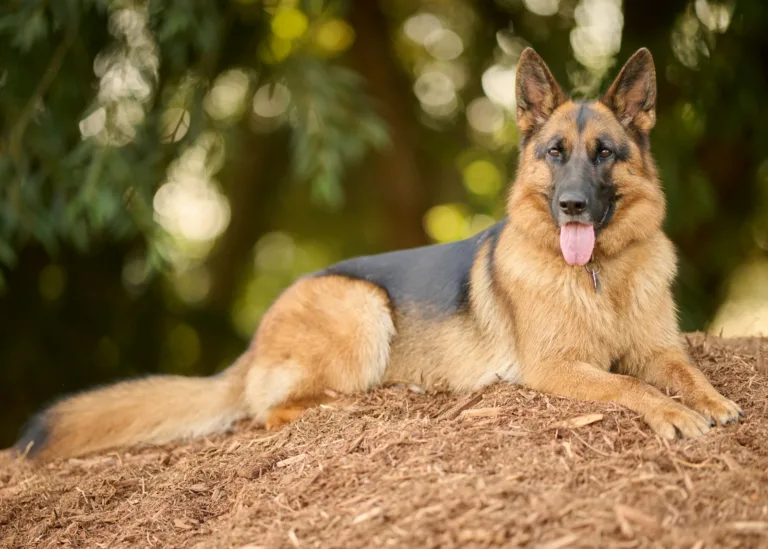
German Shepherd: a different working emphasis
Trainability can be attractive in both breeds, but their historical roles and common selection priorities differ. Ask carefully about social confidence, environmental sensitivity, guarding tendencies, and the support the breeder provides.
Do not choose a dog because you want it to be suspicious of strangers. Appropriate social experiences and safe management remain essential.
English Cocker Spaniel and Collie
An English Cocker may suit someone seeking a smaller sporting companion with feathering. Working and show families can differ, so discuss actual daily needs rather than relying on size.
A Collie offers another companion option, with rough and smooth coats. Herding-related behavior, vocal tendencies, and grooming requirements deserve their own investigation.
A practical way to decide
Hypothetical example: You like Goldens but have limited lifting capacity and want a smaller adult. An assessed adult Cocker or Toller may reduce size uncertainty, but you still need to compare activity and behavior. A puppy advertised as “mini” offers less certainty about mature measurements.
List your limits for size, grooming, exercise, noise, and time alone. Then meet suitable individuals and review health records. Our Golden temperament guide can help you turn preferences into specific questions.
FAQs
What looks like a black Golden Retriever?
A Flat-Coated Retriever is one possibility, but mixes and other dogs can resemble one. Appearance alone cannot confirm ancestry.
What is a smaller alternative to a Golden?
A Toller or English Cocker may be worth investigating, depending on your needs. Neither is simply a miniature Golden.
Which alternative does not shed?
Avoid absolute promises. Poodles often leave less loose hair, but their coats still require substantial maintenance.
Which is best for families?
The best fit depends on the individual, supervision, household routine, and responsible selection—not a universal ranking.