In this article
German Shepherd sloped back shape is not a diagnosis. Conformation, a posed stance, joint disease and neurologic weakness are different questions, even when they appear together in a photograph.
If your dog suddenly cannot stand, is severely painful or develops marked weakness, seek urgent veterinary assessment. Do not assume it is an expected consequence of the breed’s shape.
Slope curvature and stance are different
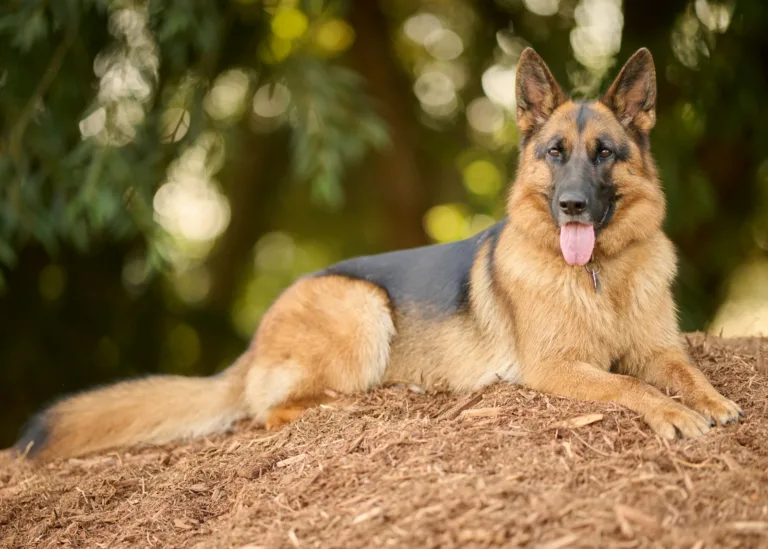
A sloping outline describes an angle; curvature describes the shape along the back. The way a dog is positioned for a photograph can also alter the impression.
| Observation | What it cannot establish alone |
|---|---|
| Sloping topline | A diagnosis of hip dysplasia |
| Straight-looking back | Freedom from orthopedic disease |
| Unusual rear-leg posture | The cause of weakness or pain |
| Genetic risk result | The diagnosis responsible for current symptoms |
Movement and comfort need assessment in addition to appearance.
What a conformation study found
Humphries and colleagues’ 2020 study examined 60 healthy, lameness-free German Shepherds with acceptable hip scores. It found associations between back slope and aspects of posture and limb loading; some movement analyses used 30 dogs because of data quality.
The study did not establish that a sloping back causes hip dysplasia. The authors called for further research into whether the observed differences relate to susceptibility to musculoskeletal disease.
This is a useful example of the difference between measuring movement and proving a long-term clinical outcome.
Why back legs may become weak
Joint pain, injury and neurologic disease are among the possibilities. The pattern, onset, examination and appropriate tests determine the investigation.
Degenerative myelopathy is one concern in the breed, but a SOD1 risk result is not proof that it explains an individual dog’s weakness. The health overview explains that distinction.
What to record for the veterinarian
Note when the change began, whether one or both limbs are affected, any injury, difficulty rising and changes in toileting. A short video can help if taken without forcing painful movement.
Do not repeatedly make the dog climb stairs or run to demonstrate the problem. Prevent slipping and follow professional advice about safe assistance and transport.
Choosing a puppy or adult
Review actual screening records and observe comfortable movement. Avoid a breeder’s promise that a particular back shape guarantees healthy hips or immunity to neurologic disease.
The hip dysplasia guide explains screening and individual treatment decisions. Appearance is one observation, not a complete medical record.
Frequently asked questions
Why do some German Shepherds look more sloped?
Conformation varies, and stance affects appearance. The visual difference does not by itself identify disease.
Are straight-backed dogs healthier?
A straight-looking back cannot guarantee health. Assess records, function and the individual dog.
Is back-leg dragging always DM?
No. Several problems can affect movement, and a diagnosis requires veterinary investigation.
Can exercise fix weak back legs?
The appropriate activity depends on the cause. Do not begin a strengthening program before assessing new weakness or pain.