In this article
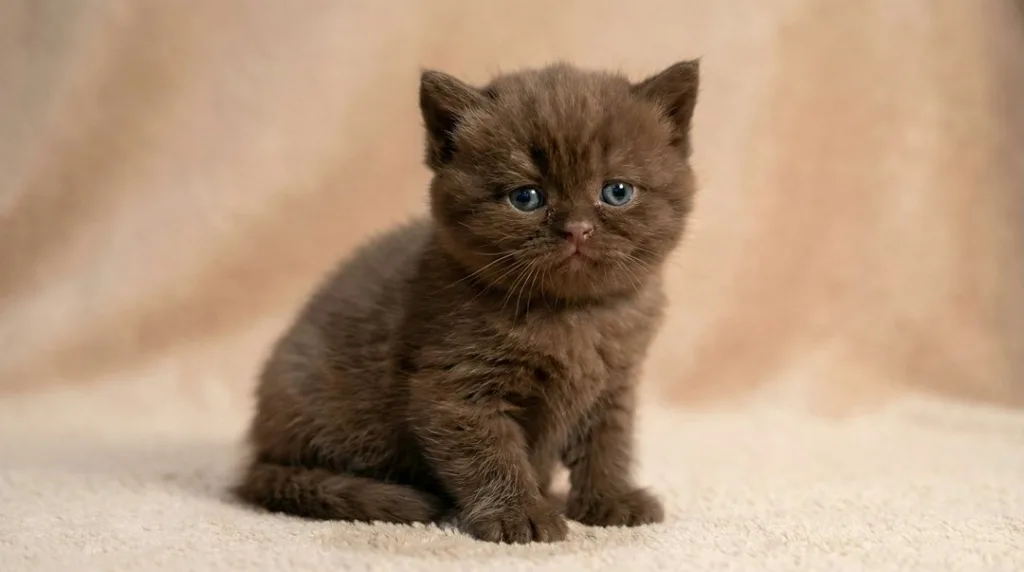
A brown British Shorthair cat may be described as chocolate, cinnamon or a brown-patterned tabby, depending on the coat. These names are not interchangeable. Before comparing kittens, ask which registered color the seller means by “brown.”
That small question prevents a lot of confusion. A warm-looking photograph can be affected by lighting, editing and the background. It cannot reliably replace the cat’s records.
What Is a Brown British Shorthair Cat Called?
Chocolate and cinnamon are distinct coat colors. Lilac is the dilute counterpart of chocolate, while fawn is the dilute counterpart of cinnamon. A brown tabby description introduces pattern as well as color, so it should not be treated as the same thing as a solid chocolate coat.
| Description | Main distinction |
|---|---|
| Chocolate | A brown-family color associated with the brown genetic locus |
| Cinnamon | A separate, generally warmer-looking brown-family color |
| Lilac | Dilute chocolate |
| Fawn | Dilute cinnamon |
| Brown tabby | A patterned description rather than a synonym for chocolate |
Our overview of the colours of British Shorthair cats places these names alongside other colors and patterns. Use the whole description rather than choosing from a single color word.
What the Genetics Actually Explains
UC Davis identifies variants at the TYRP1 brown locus associated with black, chocolate and cinnamon. In the simplified dominance order described for that locus, black is dominant over chocolate, and chocolate is dominant over cinnamon.
That does not mean this one locus explains every detail of a cat’s coat. Other inherited features influence dilution, pattern and additional effects. A photo cannot reveal all the variants a cat carries.
For an owner, the useful point is that chocolate and cinnamon have a biological distinction. They are not simply two marketing names for the same shade. A breeder making genetic claims should be able to explain which test or records support them.
A Documented British Shorthair Example
UC Davis’s brown-test information includes a photograph identified as a cinnamon British Shorthair. It provides a real breed-specific example of the color discussed by the test. The chocolate example on that page is identified as a Havana Brown, so it should not be relabeled as a British Shorthair.
This is a useful lesson when browsing galleries. A correct color explanation can still show a different breed. Read captions carefully, and do not use a borrowed photograph as proof that a seller owns the kitten being advertised.
The chocolate Ragdoll guide offers another breed context for chocolate coloring. The shared color word does not mean the cats have the same coat pattern, body type or pedigree.
Does Brown Coloring Change Personality or Care?
There is no basis here for promising that a chocolate or cinnamon British Shorthair will be friendlier, calmer or healthier than another color. Meet the individual cat and ask about behavior in ordinary situations.
Find out whether the kitten approaches people, how handling is introduced and how they respond to household activity. For an adult, ask about visitors, grooming and time alone. Those observations are more relevant to your relationship than the warmth of the coat.
Care still involves suitable food, measured portions, daily play, grooming and veterinary attention. An unusual color does not remove inherited-disease concerns or make a health document unnecessary.
Price and Seller Claims
During research on October 26–27, 2026, Happy Paws advertised a cinnamon female called Elf at $3,150. That is a dated asking-price example, not a national average or a recommendation of the seller.
Do not assume that “rare brown” justifies any price. Compare contracts, records and inclusions. Our British Shorthair price guide explains how to separate the initial payment from the cost of lifelong care.
Ask for the kitten’s identity, the parents’ details and the registration paperwork. Request a live conversation or visit appropriate to the situation. A transparent seller should answer specific questions without trying to rush the decision.
The concept of genetic dominance helps explain the relationship between the brown-locus variants. It does not mean one color is superior to another.
Once you have chosen your cat, use our cat food calculator to begin a feeding plan based on the animal, not the coat color.
FAQs
What is a brown British Shorthair called?
A solid brown British Shorthair may be chocolate or cinnamon. Brown tabby is a different, patterned description. Ask for the registered color name because “brown” alone is not precise enough.
What is the difference between chocolate and cinnamon British Shorthairs?
They are distinct colors associated with variants at the TYRP1 brown locus. Chocolate is typically described as deeper brown, while cinnamon appears warmer. Lighting can blur that visual distinction, so records matter.
Are cinnamon British Shorthairs rare?
Availability varies, and the research used here does not establish a population-wide rarity ranking. Treat “rare” as a claim to question rather than proof of quality or a reason to skip health checks.
How much is a chocolate British Shorthair?
There is no verified universal chocolate-specific price in this guide. Ask sellers for current written quotes and inclusions. Do not use a cinnamon listing or an overseas advertisement as a direct price estimate for a chocolate kitten.