In this article
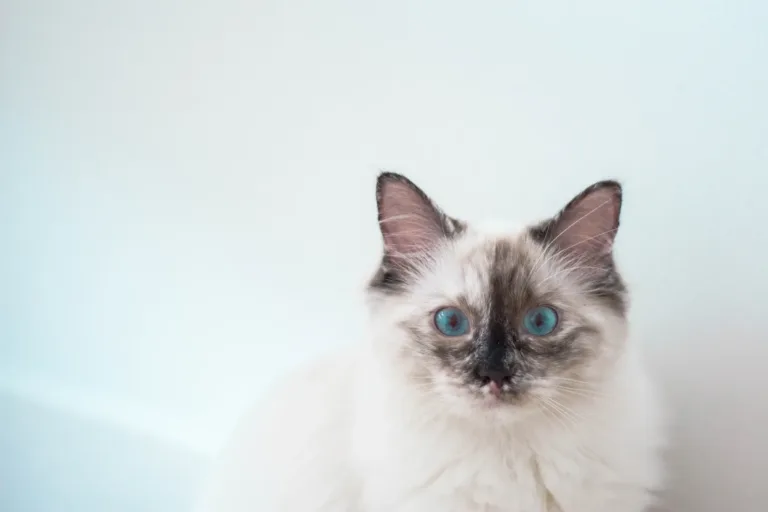
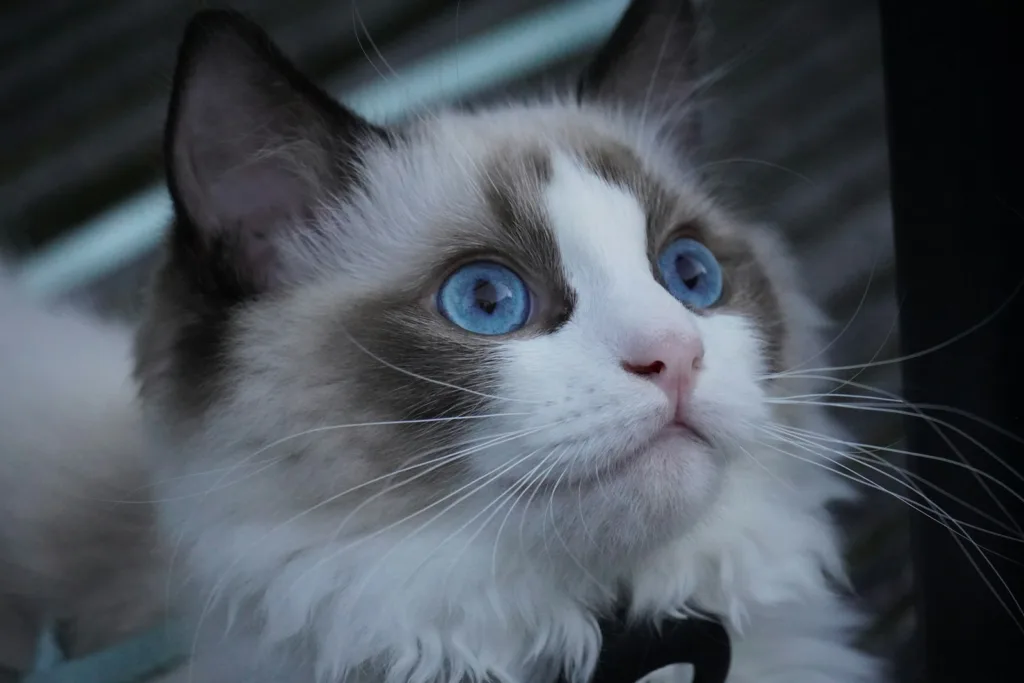
A blue bicolor Ragdoll combines a gray-toned color with a white-marking pattern. “Blue” does not mean bright blue fur, and “bicolor” does not simply mean any cat with two visible colors.
Once you separate those terms, the difference between blue colorpoint, blue mitted and blue bicolor becomes much easier to follow.
What makes a Ragdoll blue?
Blue is the dilute form of black-based pigment, appearing gray rather than the darker seal shade. UC Davis Veterinary Genetics Laboratory identifies the relevant dilution mechanism in its cat dilute test information.
The visible color does not determine white markings. That is why blue can appear with several patterns, and why a gray-and-white appearance alone does not establish a cat’s breed.
How do the three blue patterns differ?
| Pattern name | Main visual distinction |
|---|---|
| Blue colorpoint | Gray points contrasting with the paler body, without the mitted/bicolor white pattern |
| Blue mitted | White paws with associated chin and underside markings |
| Blue bicolor | More white, including the inverted V on the face |
The pattern description is separate from shade. A blue bicolor is not automatically genetically “lighter blue” because much of its face is white.
For details about paws, hind legs and facial markings, read the bicolor versus mitted guide. Pet cats can have variations that do not neatly resemble a show-standard illustration.
What is a blue lynx bicolor?
It adds tabby features to the blue bicolor description. Those markings can be visible around the face, legs or tail, although white areas may obscure parts of the pattern.
Likewise, a blue tortie description involves cream mixed with the blue color. These are layers of description, not additional breeds.
The lynx point guide and tortie guide explain each modifier separately.
Is blue the same as lilac?
No. Blue is typically a cooler gray, while lilac is the dilute counterpart of chocolate and has a paler, pinkish-gray appearance in standard descriptions.
| Comparison | Blue | Lilac |
|---|---|---|
| Underlying color relationship | Diluted black-based pigment | Diluted chocolate |
| General visual impression | Cooler gray | Paler pinkish gray |
| Can both have white patterns? | Yes | Yes |
| Can a phone photo settle an uncertain identification? | Not reliably | Not reliably |
Ask for the recorded color and supporting information when the distinction matters. Warm lighting is capable of giving a very ordinary gray cat an entirely new sales description.
See the lilac Ragdoll guide for that comparison in more detail.
How does a blue kitten’s color develop?
A pale kitten may develop stronger contrast with age. White areas and the point color need to be considered separately when looking at progress photos.
For a real illustration of developmental variation, Pastel Ragdolls’ blue-bicolor guide presents photographs labeled at four weeks, three months, one year and three years. These are the breeder’s age labels and examples; they should not be treated as a controlled photographic record of one cat or a timetable every kitten must follow.
If you are following your own kitten, use dated photographs in similar light. Compare like with like rather than comparing a bright studio kitten portrait with an adult asleep in a dark room.
Are blue bicolor Ragdolls rare or more expensive?
No representative color-frequency dataset was identified for this guide. A breeder’s current waiting list or one available litter cannot establish breed-wide rarity.
Prices also depend on the seller and included services. A quoted starting price from one cattery does not demonstrate a universal blue-bicolor premium. The Ragdoll cost guide explains how to compare real quotes.
Does the color change what living with the cat is like?
The research reviewed does not establish a distinct blue-bicolor personality. Meet the cat or ask for specific observations: how it responds to combing, whether it seeks contact and how it behaves around other animals.
Choose the appearance you like, but keep health records and household fit ahead of facial symmetry. A neatly centered V cannot tell you whether the cat will enjoy your busy living room.
Frequently asked questions
Are gray Ragdolls called blue?
Often, yes. Blue is the formal color term used for that gray appearance, but the label alone does not establish pedigree.
Does a blue bicolor need a pink nose?
The standard describes the nose within the white facial area. Individual markings can vary, and the nose alone is not enough to confirm pattern or ancestry.
Can a blue Ragdoll turn seal?
Color may deepen as the cat matures, but developmental darkening does not mean the underlying genetic color has changed from blue to seal. An initial identification may also have been mistaken.
Is blue bicolor a separate breed?
No. It is a color-and-pattern description.