In this article
An orange Ragdoll is usually described more precisely using the color term red, often with “flame” used informally. Cream is the dilute version of red. Neither color tells you how mischievous, affectionate or intelligent the cat will be.
A pale kitten can make those labels difficult to sort out from a photograph. Start with the recorded color and pattern, then use appearance as supporting context.
What is a flame point Ragdoll?
“Flame point” commonly describes red coloring on a pointed cat’s cooler extremities, such as the face, ears and tail. Registry wording matters: the reviewed CFA Ragdoll standard uses red and cream in its color descriptions.
An informal name is not necessarily a problem. The important question is whether the seller can translate it into the actual color and pattern recorded for that cat.
“Orange and white Ragdoll” is less specific. It might be someone’s everyday description of a red bicolor, but it cannot establish the formal pattern or ancestry on its own.
Red versus cream: what is the difference?
Cream results from dilution of red pigment. It is not simply a red cat photographed in weak light, and a pale kitten is not automatically cream.
| Term | What it describes | What it does not establish |
|---|---|---|
| Red | The registry color often called orange or flame | A particular temperament |
| Flame | Informal wording commonly used for red points | A separate breed |
| Cream | Diluted red coloration | A guarantee that every photograph will look beige |
| Red bicolor | Red plus a bicolor white pattern | Parentage without records |
| Red lynx | Red with the lynx/tabby pattern designation | Wild-lynx ancestry |
UC Davis Veterinary Genetics Laboratory describes the dilution variant that lightens red to cream. The same dilution system produces other familiar color changes, but it acts on the cat’s underlying color.
Our Ragdoll color and pattern guide separates those layers so you can compare listings without treating every adjective as a new type of cat.
Why can red and cream kittens look almost white?
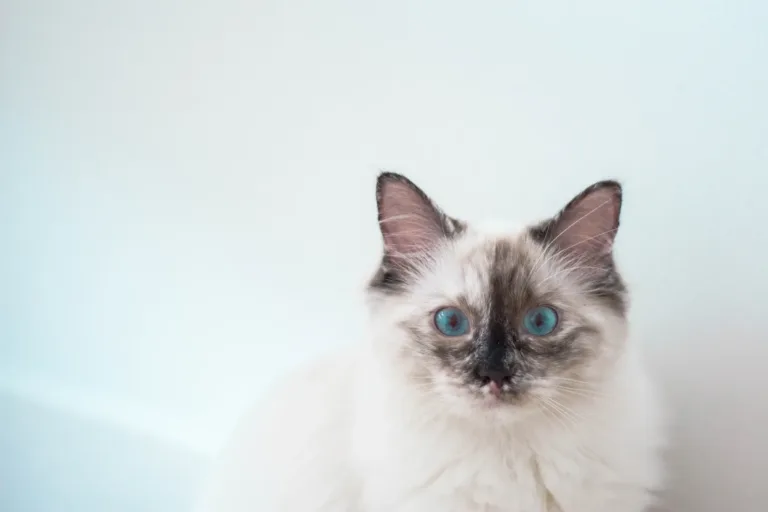
Point color develops as kittens grow, and pale red-family colors can be subtle. A young cream kitten may show little contrast in a bright photograph.
Ask for dated pictures of the face, ears and tail in ordinary light. Check whether the description is recorded or provisional, and ask what information supports it.
Adult examples can help you understand the general color family. They cannot promise the exact shade or contrast your kitten will develop.
If a listing simply says “white Ragdoll,” use the white Ragdoll guide to distinguish pale points, extensive white markings and an all-white adult coat. Those are different questions hiding inside the same phrase.
Are orange Ragdolls always male?
No. Female orange cats exist. The genetics of orange color are associated with the X chromosome, which helps explain the familiar sex imbalance, but the research reviewed here does not provide a reliable male-to-female percentage specifically for orange Ragdolls.
In 2025, Stanford Medicine described research identifying a deletion associated with orange coloration and altered activity of ARHGAP36. The finding helps explain pigment biology; it does not validate internet claims about “orange-cat brain cells.”
For the ordinary inheritance explanation, a male with one X chromosome can express orange from that X. A female with two X chromosomes can be orange when the relevant orange-associated variant is present on both; different variants across the two can produce tortoiseshell mosaic coloring through X-chromosome inactivation.
This is a simplified explanation of the usual chromosomal arrangement, not a claim that every cat fits it. A breeding question about a particular pairing needs the actual parents’ genetic information.
How do flame lynx and tortie fit in?
Lynx describes tabby markings, while tortie describes the combination of orange and non-orange color areas. They are not synonyms for red.
A cat may also have a white pattern such as mitted or bicolor. The full name therefore combines information about pigment, markings and white distribution.
For stripes, see the lynx point guide. For the patchwork effect, the tortie and torbie guide explains the distinction and why “calico” is not the most precise label for every registry situation.
Are red and cream Ragdolls accepted by registries?
Red and cream appear in the reviewed CFA and TICA Ragdoll color systems. Acceptance of a color does not automatically establish that an individual meets every registration or exhibition requirement.
Ask which registry is involved and check the current standard when show eligibility matters. A photograph cannot replace the paperwork, and a color name cannot certify a breeder’s practices.
Do flame Ragdolls need special care?
Not because they are red or cream. Feeding should match life stage, health and body condition; grooming should match coat condition and tolerance.
The feeding guide explains portion decisions, while the temperament guide focuses on observing the individual rather than predicting behavior from appearance.
Choose the cat whose needs suit your household. A warm-colored tail is lovely, but it does not come with a different instruction manual.
Frequently asked questions
Are there orange Ragdoll cats?
Yes. Red is the more precise registry color term commonly associated with the everyday words orange and flame.
Is cream point the same as flame point?
No. Flame commonly refers to red, while cream is diluted red. Lighting and age can make the distinction difficult to judge from photos alone.
Are flame point Ragdolls rare?
Availability varies by location and breeding program. The reviewed sources do not establish a current population-based rarity ranking, so a seller’s “rare” claim is not a reason by itself to pay more.
Are orange Ragdolls more playful or less intelligent?
There is no reliable evidence in the reviewed research establishing those personality or intelligence traits from red coloration. Judge the individual cat’s behavior.