In this article
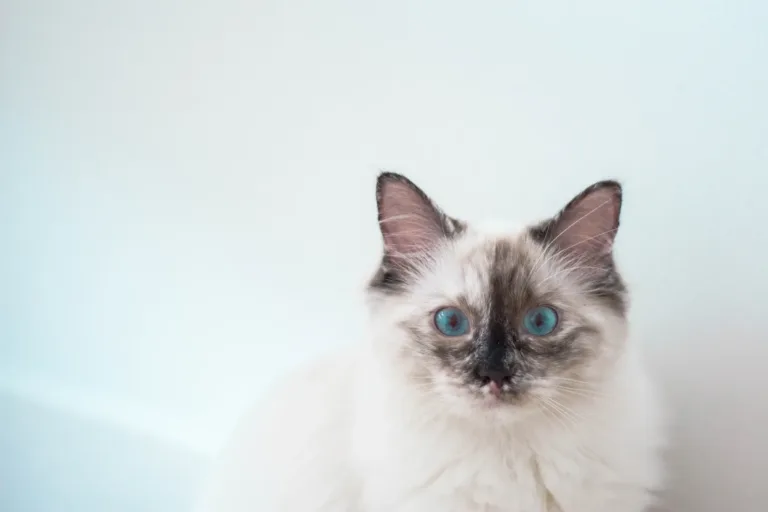
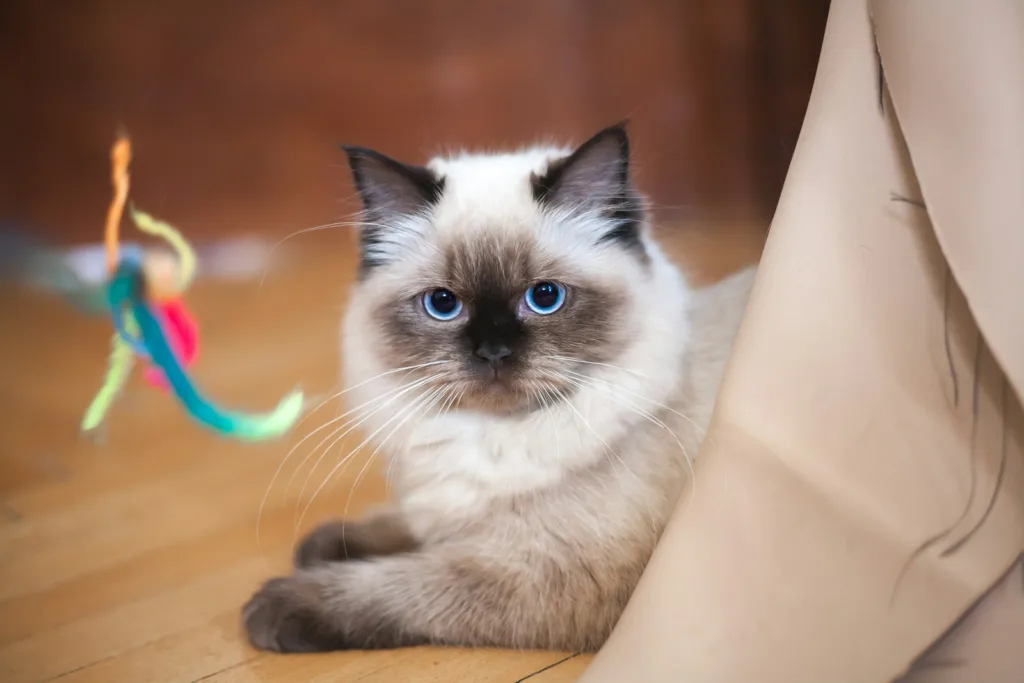
A seal point Ragdoll has dark brown coloring at the cooler extremities of the body. “Seal” names the color. Other words in the cat’s description tell you about white markings or additional patterns.
That distinction explains why a seal mitted and a seal bicolor can look quite different while belonging to the same color family. One label is doing several jobs only if you ask it to.
What does seal point mean?
The points are the face, ears, legs and tail, contrasting with a lighter body. Seal is a deep brown shade that can appear almost black in some photographs. It is distinct from the warmer, lighter chocolate color.
The CFA Ragdoll standard describes the colors and patterns used in its show system. Those descriptions help explain a name, but matching a photograph to a standard does not establish the cat’s ancestry.
Seal colorpoint, seal mitted or seal bicolor?
| Description | What the extra word tells you |
|---|---|
| Seal colorpoint | Dark points without the white distribution of mitted or bicolor |
| Seal mitted | White paws and associated white chin/underside markings |
| Seal bicolor | More extensive white, including the characteristic facial V |
| Seal lynx | Tabby markings overlay the point color |
| Seal tortie | Red tones are mixed into the seal-colored areas |
Some labels combine several of these ideas. “Seal lynx mitted” describes a color, a tabby overlay and a white pattern. It does not describe three different breeds sharing one cat.
For the exact differences in white placement, use the bicolor versus mitted guide. For an overview of how the naming system fits together, see Ragdoll colors and patterns.
How can you tell seal from blue?
Seal reads as dark brown; blue is a diluted, cooler gray. Compare the colored areas in neutral light rather than relying on a heavily edited listing photo.
The background matters too. Warm indoor lighting can make gray look browner, while a bright exposure can wash out dark points. A cat photographed on three different phones can appear to have acquired three different coats.
Ask the breeder which color is recorded and how it was determined. If identification is genuinely uncertain, parentage information or appropriate color testing is more useful than another round of guesses from strangers.
Our blue Ragdoll guide explains the gray color family and its patterns.
Is seal the same as chocolate?
No. “Brown” is an everyday description broad enough to cover both, but seal and chocolate are separate color terms.
A lighter photograph of a seal cat does not make it chocolate. Nor should “chocolate seal point” be accepted as a precise interchangeable label without clarification. The chocolate Ragdoll guide explains the distinction and why genetics can be more informative than a screen image.
Will a seal kitten stay the same shade?
Pointed coats develop and can change in depth as cats mature. A young kitten may have much less contrast than an adult. White-marked areas and pale body shading can also make the eventual appearance difficult to predict from an early photograph.
Use progress photos to understand that individual kitten, not as a promise of an exact adult shade. Ask whether images show the same cat at different ages; a collection of unrelated kittens is not a development record.
Normal color development should also be kept separate from skin disease or patchy hair loss. If a coat change includes discomfort, bald areas or other signs of illness, ask a veterinarian rather than assuming it is simply the points developing.
What about seal mink or seal sepia?
Here, “seal” still concerns color, while mink or sepia describes pigment distribution. Those terms need their own registry context. An advertisement using the Ragdoll name may not be referring to the same show category as a traditional pointed Ragdoll.
Before making a purchase decision, read the mink, sepia and Cherubim guide. Ask what will appear on the registration paperwork rather than trying to settle the question from coat darkness.
Does seal coloring change care or personality?
There is no basis in the evidence reviewed for assigning seal cats a special personality or feeding plan. Ask about the individual’s handling preferences, social experience and health history.
Color can be a preference. It should not displace the questions that affect life with the cat: grooming tolerance, activity, compatibility with the home and the quality of its care.
Frequently asked questions
Are seal point Ragdolls rare?
They are a well-established color variety, but this guide does not have a representative color-frequency dataset to rank their rarity. Treat precise rarity claims cautiously.
Can a seal point Ragdoll have white paws?
Yes, when the description includes an appropriate white pattern, such as mitted or bicolor. Ask whether “seal point” is being used broadly for the color or specifically for the colorpoint pattern.
Is a seal lynx Ragdoll part wild cat?
The term refers to tabby markings, not wild-lynx ancestry. The lynx point guide explains the naming.
Can I identify seal from the nose alone?
Do not rely on one feature. White markings, lighting and individual variation can complicate visual identification.